Children's dentistry: check-ups, baby tooth fillings, booking
We see children from age 3, with Dr Hà My, and a parent stays in the room throughout. A child's check-up costs 0 VND. Baby tooth fillings have their own price, final after the exam. The first visit is often about getting used to the chair and the dentist; treatment starts only when child and parent are ready.
- Exam free
- A 30-minute check-up
- Dr Hà My
Starting prices, item by item
| Item | Price |
|---|---|
| Child check-up | No charge |
| Baby tooth filling | from 250,000 VNDper tooth |
Not included
- X-ray if needed
What happens in the chair
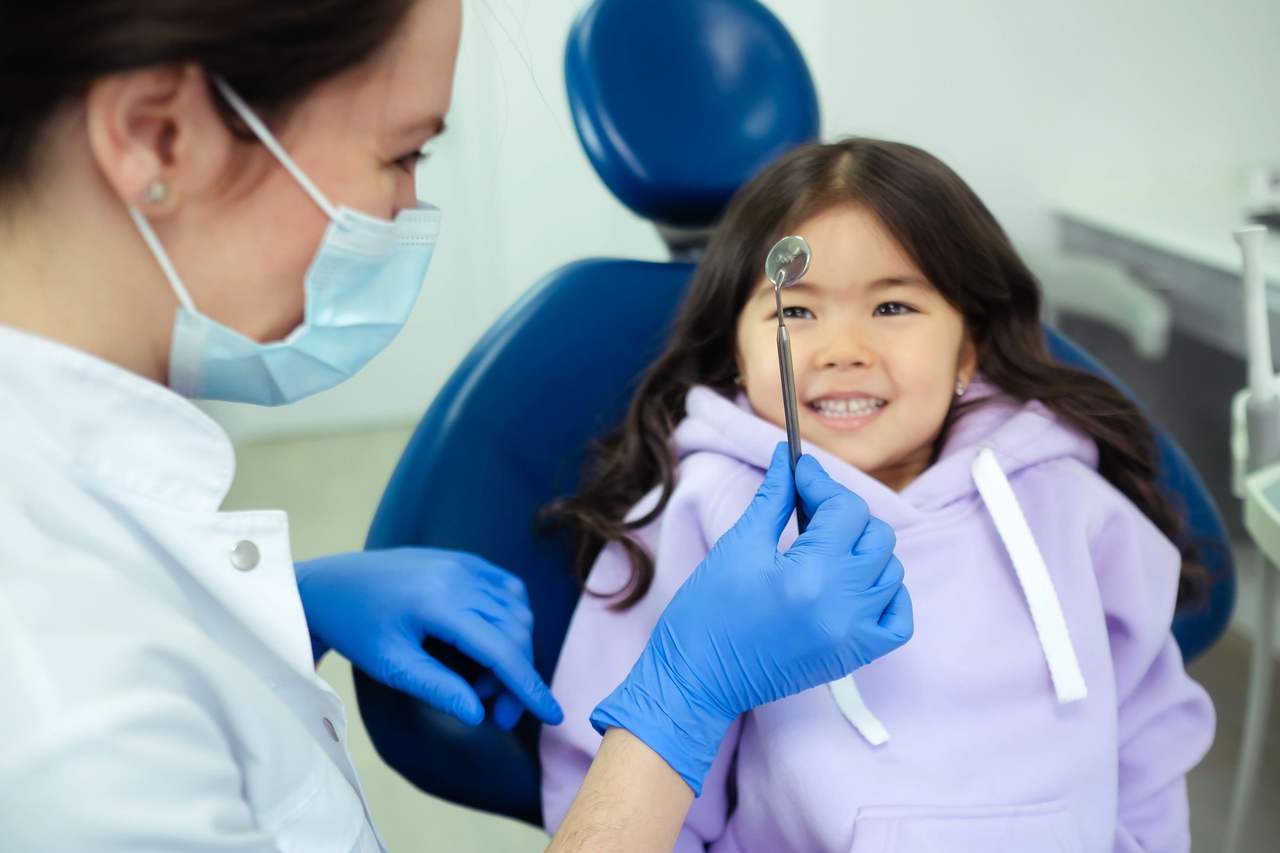
- Getting comfortable30-minute visitYour child can sit in the chair, hold a mirror to look at their own teeth and pick something from the toy box. You sit alongside, or your child can sit on your lap.
- Checking the teethThe dentist counts the teeth, looks for decay and checks the gums and bite, explaining in simple words to your child and to you. X-rays only if needed, with the reason given.
- Planning with the parentThe dentist explains which teeth need filling, which to watch, and whether any should come out and why, with a written quote. You decide.
- Treatment at a later visitFillings are booked as a separate visit. Your child is told each step before it happens. If they are too frightened, the dentist stops and books another day rather than pushing on.
Which children should come, and when to phone instead
Children from age 3 can come for a routine check-up, or when you notice dark spots on a tooth, your child complains that sweets hurt, or an adult tooth is coming in behind a baby tooth that has not fallen out. A child who is afraid of the dentist can come just to get used to the place on the first visit.
We do not see children under 3. If your child has a swollen face, a fever, a broken tooth from an injury or bleeding that will not stop, do not wait for an appointment: phone 0963 929 241 in opening hours; out of hours call 115 or go to the nearest emergency department. Other questions parents often ask are on the FAQ page.
What affects the price
A child’s check-up costs 0 VND on the price list of 4 October 2026; any treatment after that is a starting price, final after the exam. Baby tooth fillings are priced per tooth and depend on the size of the cavity and how many surfaces are involved. All prices are on the price list. The quote lists each tooth separately so you can decide.
What is not included
X-rays, when the dentist thinks they are needed, are charged separately and the reason is given before they are taken. Root canal treatment of a baby tooth, if needed, is quoted on its own. Children’s check-ups and fillings need no deposit.
Who does it
Dr Trần Hà My, BS.CKI (specialist level I, a postgraduate clinical qualification in Vietnam), root canal treatment and children’s dentistry, 10 years in practice, practising licence no. 000074/HCM-GPHN (fictional). She keeps a toy box in the room and lets children hold a mirror to see their own teeth. She works Monday, Wednesday, Thursday, Friday and Saturday and explains in Vietnamese. See Dr Hà My’s profile.
How long it takes
The first check-up is 30 minutes. If several teeth need filling, the dentist splits the work into short visits so your child does not sit for long. You can book for your child; give the parent’s name and the child’s age. The clinic phones to confirm within 2 working hours.
Your dentist for this

Questions about this service
Will my child need a tooth taken out?
We cannot tell before the exam. Many decayed baby teeth can be filled; a badly decayed tooth, or one about to fall out, may be better removed. The dentist explains why and asks you first.
Can I stay in the room?
Yes. For children under 16, a parent or guardian stays for the whole visit. When booking, give the parent's name and the child's age.
Which time of day suits a child?
Many parents choose a morning, before their child gets tired. Dr Hà My works mornings from 8:00 to 12:00 on Monday, Wednesday, Thursday, Friday and Saturday.
Do baby tooth fillings need an anaesthetic?
It depends on the cavity. Small ones usually do not. Deeper ones may need a local anaesthetic; the dentist explains it to your child first and goes one step at a time.